Image
Image
REPRODUCTIVE HEALTH AWARENESS PROGRAM AND REUSABLE SANITARY PAD DISTRIBUTION
Saving mothers and childrenLocation
: Saraswoti Kunj School, Panauti
Date
July, 2025-26
Beneficiaries
70
Rotarian Involvement
7
Non-Rotarian
90
Project Details
Club
Kavre Valley
Month
July
Fiscal Year
2025-26
Category
Saving mothers and children
Project Description
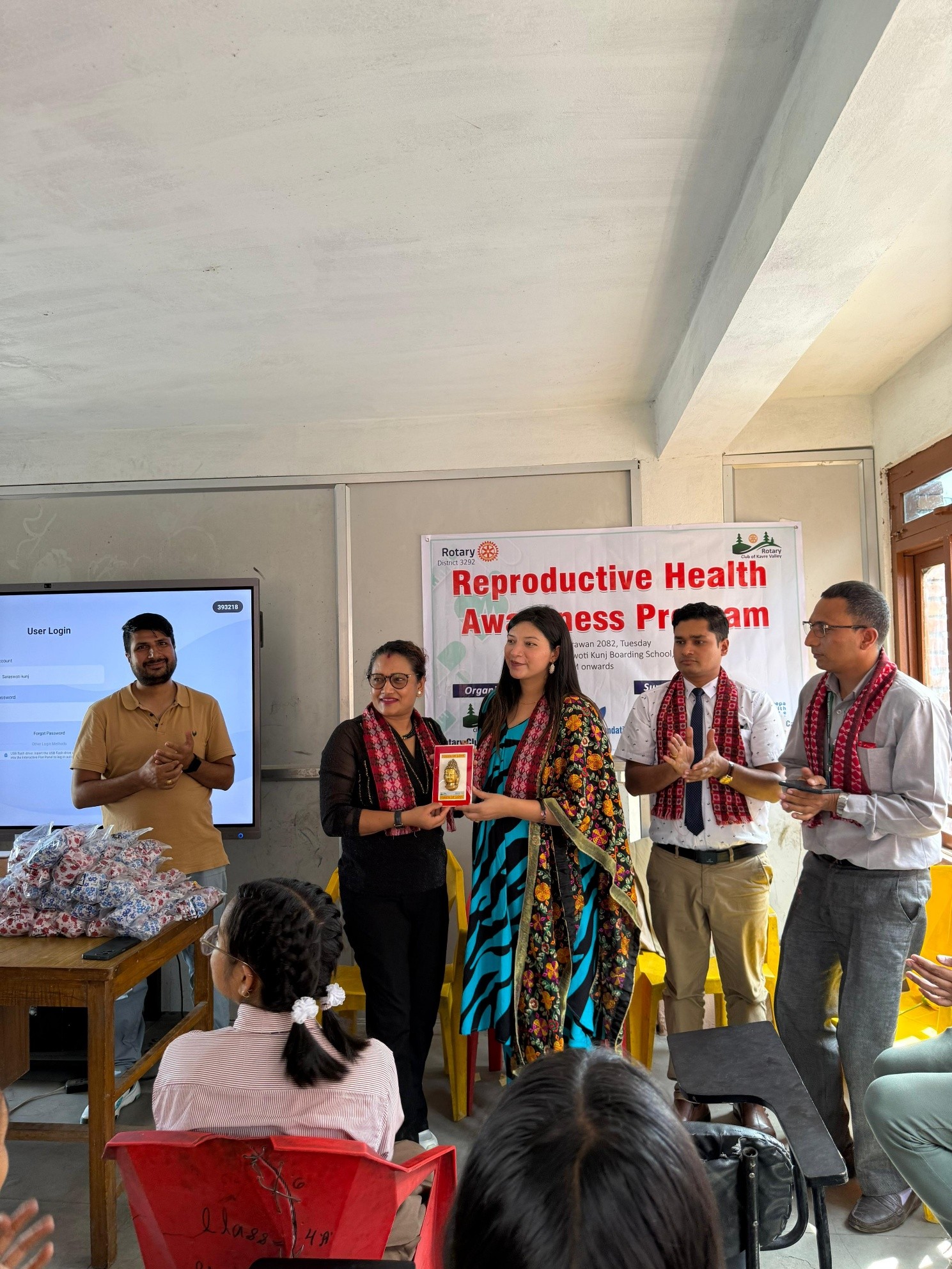
The Reproductive Health Awareness Program was organized by Rotary Club of Kavre Valley on 29th july, 2025 at Saraswoti Kunj School , with the objective of educating adolescent girls and women on essential aspects of reproductive health and hygiene. Recognizing the barriers many face in accessing affordable menstrual products, the event also included the distribution of reusable sanitary pads to promote sustainable menstrual hygiene practices.
________________________________________
2. Objectives
• To increase awareness and understanding of reproductive health, menstrual hygiene, and safe practices.
• To break the stigma and dispel myths surrounding menstruation.
• To introduce and promote the use of eco-friendly, reusable sanitary pads.
• To empower participants to take control of their reproductive health.
________________________________________
3. Activities Conducted
a. Health Awareness Session
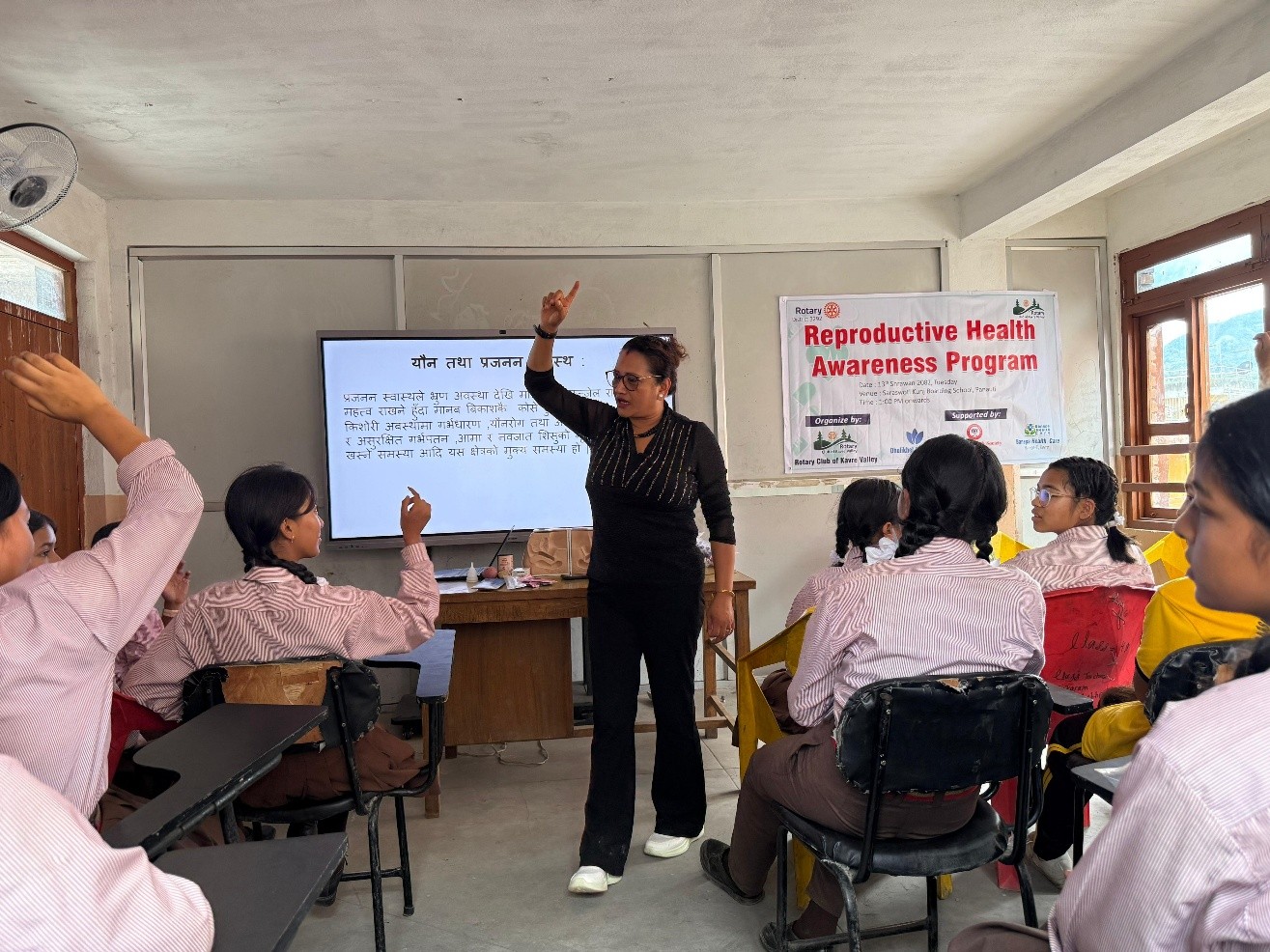
A comprehensive awareness session was conducted by Trainer , Ms. Tulshi Mannadhar, President of Lok Priya Health Society, covering topics such as:
• Basics of reproductive anatomy
• Menstrual cycle and hormonal changes
• Personal hygiene during menstruation
• Common reproductive health issues
• Myths and taboos around menstruation
• Importance of seeking medical help for reproductive concerns
Interactive discussions and Q&A sessions helped ensure that the participants felt safe and encouraged to share their concerns and doubts.
b. Demonstration on Reusable Sanitary Pads
A live demonstration on how to use, wash, and store reusable sanitary pads was given. Key benefits highlighted included:
• Cost-effectiveness over time
• Environmental friendliness
• Skin safety due to natural materials
________________________________________
4. Distribution of Reusable Sanitary Pads
Each participant received a hygiene kit containing:
• 3–5 reusable cloth sanitary pads
• An instruction leaflet (in local language)
• A carry/wash bag
In total, 100 reusable sanitary pad kits were distributed.
________________________________________
5. Feedback and Impact
Feedback from participants was overwhelmingly positive. Many expressed gratitude for the information shared, especially about menstrual health and hygiene practices they were previously unaware of. Several attendees showed interest in advocating for reusable pads in their own communities.
________________________________________
6. Conclusion and Recommendations
The program successfully met its objective of raising awareness and promoting sustainable menstrual hygiene. To further strengthen the impact:
• More such awareness camps should be conducted at regular intervals.
• Schools and community groups should incorporate reproductive health education in their curriculum.
• Local production units for reusable pads could be supported to ensure affordability and accessibility.
________________________________________
7. Acknowledgements
We thank Trainer Tulshi Manandhar ( President of Lok Priya Health Society, The Dhulikhel Foundation for the Reuasble Sanitary Pads ,Banepa Health Care, Saraswoti Kunja School, volunteers, and all participants who made this program a success.
________________________________________
2. Objectives
• To increase awareness and understanding of reproductive health, menstrual hygiene, and safe practices.
• To break the stigma and dispel myths surrounding menstruation.
• To introduce and promote the use of eco-friendly, reusable sanitary pads.
• To empower participants to take control of their reproductive health.
________________________________________
3. Activities Conducted
a. Health Awareness Session
A comprehensive awareness session was conducted by Trainer , Ms. Tulshi Mannadhar, President of Lok Priya Health Society, covering topics such as:
• Basics of reproductive anatomy
• Menstrual cycle and hormonal changes
• Personal hygiene during menstruation
• Common reproductive health issues
• Myths and taboos around menstruation
• Importance of seeking medical help for reproductive concerns
Interactive discussions and Q&A sessions helped ensure that the participants felt safe and encouraged to share their concerns and doubts.
b. Demonstration on Reusable Sanitary Pads
A live demonstration on how to use, wash, and store reusable sanitary pads was given. Key benefits highlighted included:
• Cost-effectiveness over time
• Environmental friendliness
• Skin safety due to natural materials
________________________________________
4. Distribution of Reusable Sanitary Pads
Each participant received a hygiene kit containing:
• 3–5 reusable cloth sanitary pads
• An instruction leaflet (in local language)
• A carry/wash bag
In total, 100 reusable sanitary pad kits were distributed.
________________________________________
5. Feedback and Impact
Feedback from participants was overwhelmingly positive. Many expressed gratitude for the information shared, especially about menstrual health and hygiene practices they were previously unaware of. Several attendees showed interest in advocating for reusable pads in their own communities.
________________________________________
6. Conclusion and Recommendations
The program successfully met its objective of raising awareness and promoting sustainable menstrual hygiene. To further strengthen the impact:
• More such awareness camps should be conducted at regular intervals.
• Schools and community groups should incorporate reproductive health education in their curriculum.
• Local production units for reusable pads could be supported to ensure affordability and accessibility.
________________________________________
7. Acknowledgements
We thank Trainer Tulshi Manandhar ( President of Lok Priya Health Society, The Dhulikhel Foundation for the Reuasble Sanitary Pads ,Banepa Health Care, Saraswoti Kunja School, volunteers, and all participants who made this program a success.